
So, you’re considering EMDR therapy. First of all, give yourself a massive amount of credit. Deciding to confront the things that keep you feeling stuck—whether it’s past trauma, an overwhelming phobia, or the exhausting loops of OCD—takes serious courage.
But if you’re like most people, your next thought is probably: Wait, what actually happens in a session? Am I going to have to relive my worst moments on day one? Take a deep breath. The short answer is no.
At Elevate Counseling, we provide EMDR therapy in Chicago and the western suburbs, and we are here to pull back the curtain. Starting therapy shouldn't feel like a mystery. Here is exactly what you can expect when you walk through our doors (or log into a telehealth session) for your very first EMDR appointment.
What is EMDR, Anyway?
Before we dive into the first session, let’s demystify the acronym. EMDR stands for Eye Movement Desensitization and Reprocessing.
It’s a specialized, evidence-based therapy that helps your brain reprocess stuck, distressing memories so they lose their emotional charge. Unlike traditional talk therapy, EMDR uses bilateral stimulation (like side-to-side eye movements, gentle hand taps, or alternating audio tones) to help both hemispheres of your brain digest painful experiences
While it’s famous for treating PTSD, it is also incredibly effective for a wide range of concerns. At Elevate Counseling, we frequently utilize EMDR for trauma, phobias, OCD, and severe anxiety.
Setting the Record Straight: The First Session is NOT "Reprocessing"
Let's debunk the biggest myth right now: You will not be diving headfirst into your trauma during your first EMDR session. EMDR is a structured, eight-phase treatment. Your first session is entirely focused on Phase 1 (History Taking) and Phase 2 (Preparation). Think of it as packing your bags and checking the map before embarking on a road trip. Your therapist isn’t going to step on the gas until they know you are safe, comfortable, and equipped for the drive.
Here is the breakdown of what your first session will actually look like:
1. Sharing Your Story (At Your Own Pace)
Your therapist will spend time gathering your history and understanding your current symptoms. They will ask what brought you in and what your goals are. If you are seeking EMDR for OCD or phobias, you’ll map out the specific triggers that disrupt your daily life.
Important Note: You do not have to share every gritty detail of a traumatic event to make EMDR work. Your therapist just needs a macro-level understanding of what you want to target. You are always in the driver's seat.
2. Learning the Grounding "Toolbelt"
Before you touch any heavy memories, your therapist will teach you specific grounding techniques and emotional regulation skills. You will work together to build internal resources, such as creating a mental "Safe or Calm Place."This ensures that if you ever feel overwhelmed in future sessions, you have a reliable anchor to bring you back to the present moment.
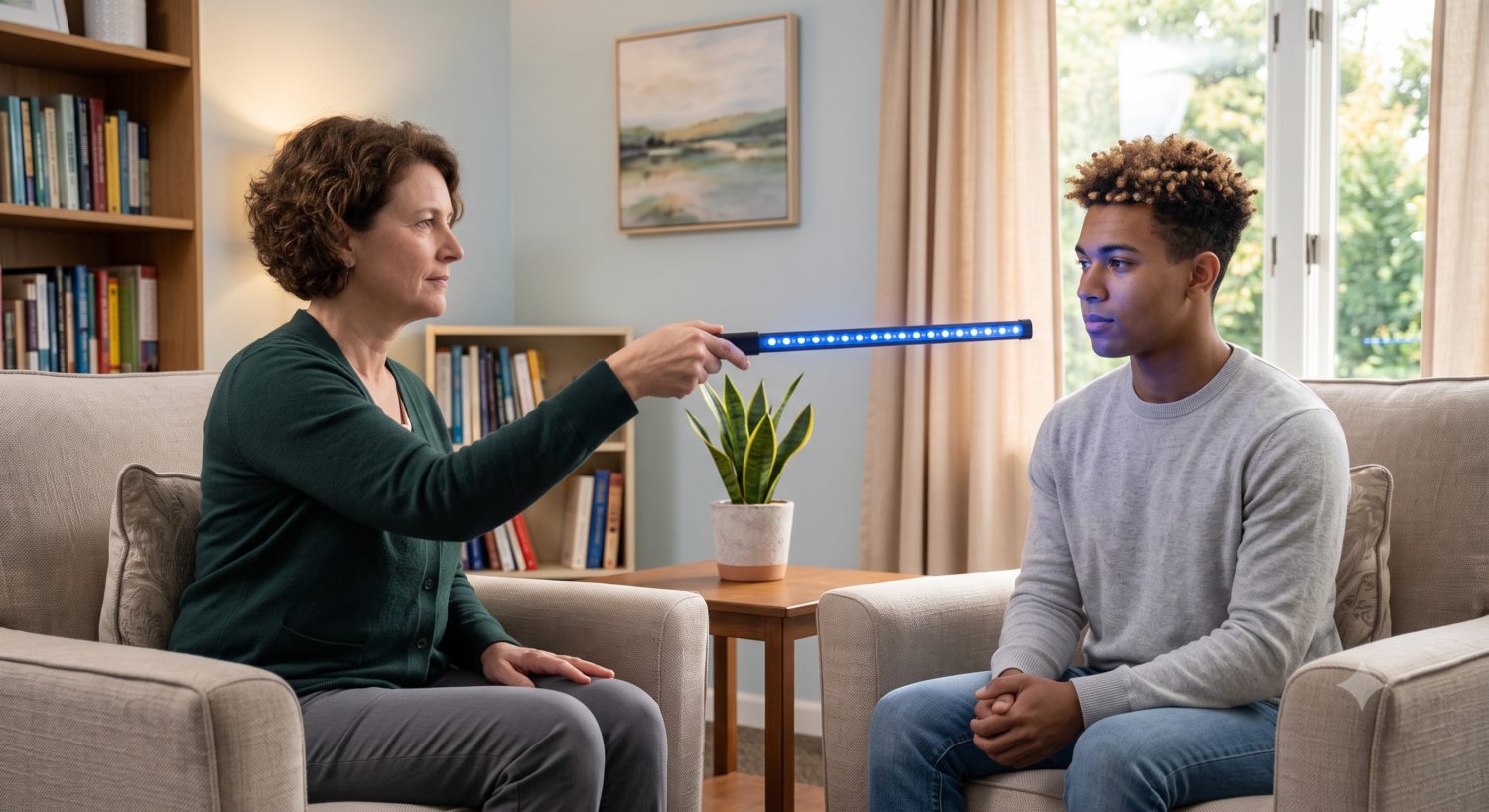
3. Testing the Bilateral Stimulation (BLS)
You’ll get a chance to test drive the physical components of EMDR. Your therapist will introduce different types of bilateral stimulation to see what feels best for you. This might involve:
Following their fingers or a light bar with your eyes.
Holding small buzzers in your hands that pulse gently from left to right.
Listening to alternating tones through headphones.
You get to decide which method feels most comfortable and soothing to your nervous system.
Why Choose Elevate Counseling for EMDR?
Your relationship with your therapist is the most vital ingredient in successful EMDR therapy. You need a space where you feel completely secure.
Elevate Counseling offers specialized, compassionate care tailored directly to your unique story. We serve clients across the Chicagoland area, providing accessible EMDR counseling in Chicago as well as the western suburbs of Chicago. Whether you prefer meeting in a comfortable suburban office or utilizing our secure virtual therapy platform, we adapt to what fits your lifestyle.
What to Do After Your First Session
Because your first session is mostly about collaboration and building resources, you won't leave feeling emotionally drained from trauma processing. However, talking about your history can still bring up a mix of emotions.
Be gentle with yourself: Plan a low-stress evening after your appointment.
Hydrate and rest: Emotional heavy lifting can translate to physical fatigue.
Notice your thoughts: Keep a journal of any insights, vivid dreams, or shifts in mood that pop up between sessions. This is valuable data for your next appointment!
Ready to Take the First Step?
Living with the weight of trauma, the hypervigilance of anxiety, or the constraints of OCD can make your world feel incredibly small. But you don't have to stay stuck in those old patterns.
If you are looking for experienced trauma therapy in Chicago or the surrounding suburbs, our team at Elevate Counseling is here to guide you through every phase of the healing process—at a pace that feels entirely safe for you.
Reach out to Elevate Counseling today to schedule your initial consultation, and let's start moving forward together.